War Upon War, and Critique Upon Critique
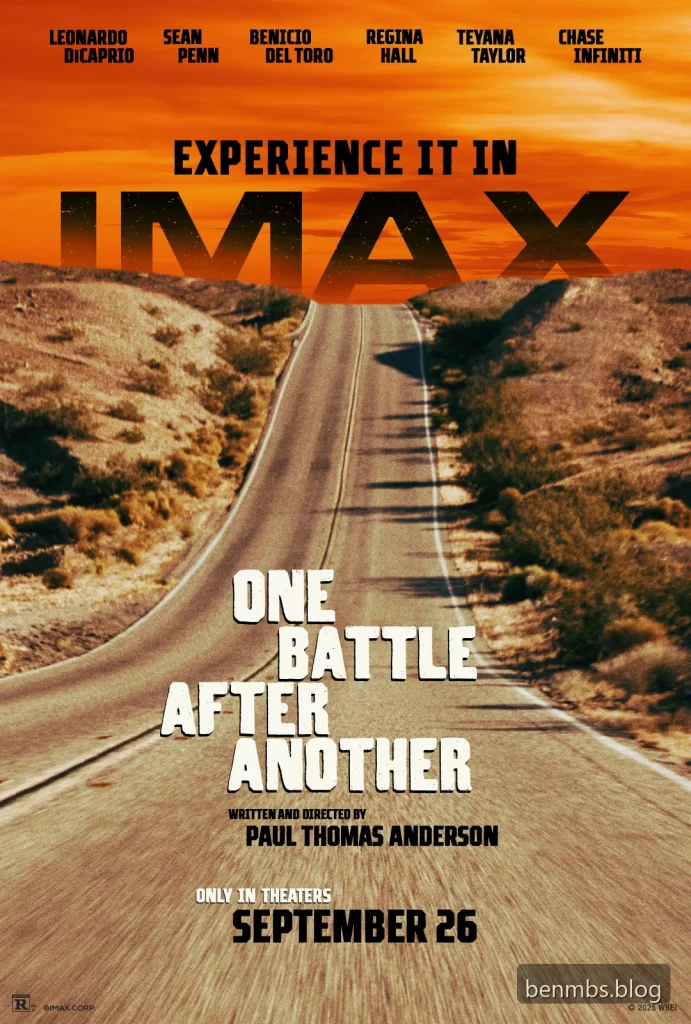
This piece contains plenty of details liable to spoil the mood, and the unpleasantness isn't confined to one section — it's spread across the whole thing. Either leave now, or read to the end.
Why, and how, this film?
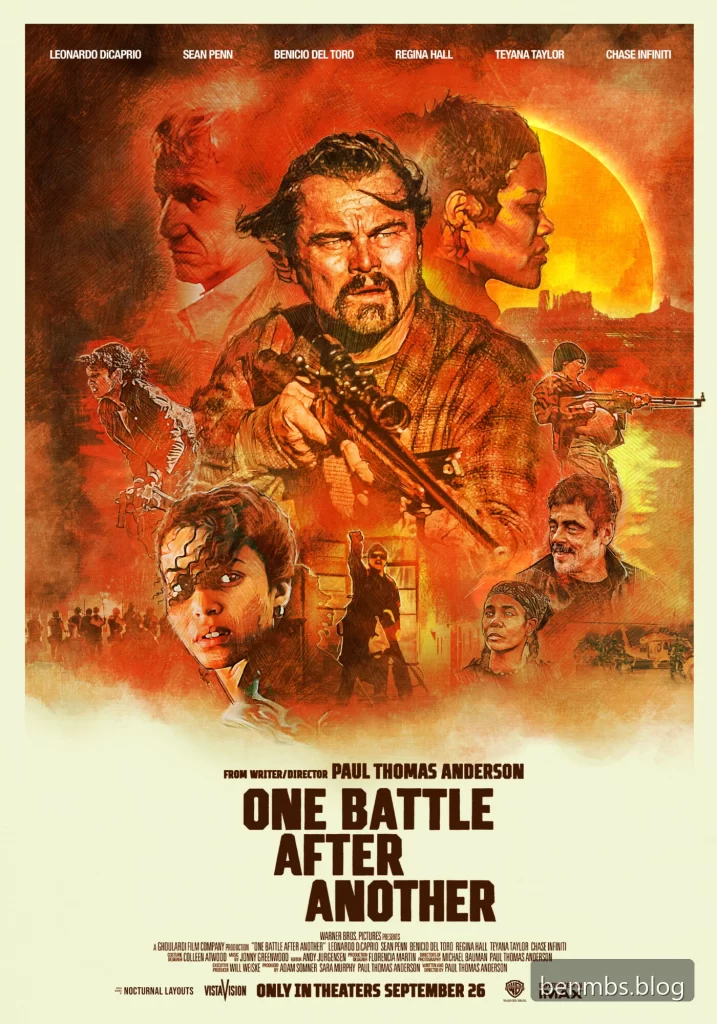
I watched War Upon War / One Battle After Another — starring Leonardo DiCaprio, sitting in the 90s on Rotten Tomatoes and at 8.3 on IMDb — at the cinema in Üsküdar's Nev Çarşı, one that doesn't sell boycotted products. After getting positive reviews from plenty of people I follow on Twitter and elsewhere, and falling for the trailer1 myself, I figured, why not, and here we are.
Despite running close to three hours, the film manages to hold your attention without boring you. The performances are quite satisfying. The music is good. The shooting technique is unusual — the director has clearly tried something, and to my mind it pays off. That chase scene on the highway in particular is genuinely good, original. It makes itself felt.
Don't Be Fooled by Wistful, Childish Trailers
I said I fell for the trailer, but I have to say that the film that played out in my head when I watched the trailer was drastically different from the film I saw in the cinema. I felt taken in, that much. The trailer had far more action and "incident," while unfortunately the film didn't deliver that same intensity. I'm not saying the film was bad, but being this out of step with its own trailer really isn't a pleasant thing. The trailer, to my mind, promised us a story packed full of incident, while what we got in the film was a disjointed, shallow narrative. We'll dig into this further on.
The Film's Narrative
Throughout the film we get to see the crookedness of America, and lives just as crooked. Cartels, drug trafficking, illegality, exclusion, life on the run... They've woven these elements of life into the film without shoving them in your face, and in one sense that's a nice touch. But further down, I'll explain in another sense why it isn't quite so nice.
Reducing it drastically, we can sum up the film in the following paragraph:
There's a group called French 75. They get mixed up in various acts of terrorism for various motivations. Two members of that group get a bit more of the camera's attention. Then they have a child. The group gets ratted out. The mother figure vanishes; the father raises the daughter. Then an ex-soldier suddenly remembers he has a child and comes after them. After making contact with a new set of people and going through all sorts of adventures, the father carries on with his daughter in an updated version of their old life.
Don't miss new posts
Join the email list and hear about new writing as it lands.
A Surface-Level Critique of a Depthless Narrative
We've said nice things about the film, but I think it has real shortcomings when it comes to script and editing. My negative criticisms of the film will come from here. Going back to the part I described, drastically reduced, one paragraph ago: I think the film's biggest problem is this — we never fully understood a single character, never got to know a single group, couldn't empathize with anyone. Everything was glossed over. The director drops us into the middle of an event and expects us to get invested in it. But that isn't always possible.
- For instance, a 16-year-old girl, thrown together with a group of nuns, could pick up an automatic rifle and empty a magazine. And we, as the audience, were left to infer: "so I guess she and her father must have done some training over those 16 years."
- Or, at the very start, what was it that set these characters down this path in the first place? How was the group organized?
- Where did the connection between the girl's trainer and the group, and the main guy's link to it, actually come from?
- What was the deal with the nuns?
- And what on earth was the deal with the group called the Christmas Adventurers?
Yes, a film doesn't have to hand the viewer everything, but leaving this many gaps — especially since this gap runs through everything — inevitably makes the viewer ask, "what exactly are we watching here?" Every one of the points above could be given an answer, yes, I grant that. But here's what I object to: the director drops us into the middle of an event and expects us to get invested in it. But that isn't always possible. And this has a couple of problems.
- When dozens of characters are dumped on you without their stories being deepened, the viewer is left on the outside. To my mind, this isn't what's meant by letting the viewer fill in the gaps.
- Because so many elements never get any depth, question marks pile up over what the film is even trying to do. It's not clear what kind of film this is supposed to be.
What kind of film is this, exactly? I don't think this part was conveyed well to the audience. I thought about it after the film. What did we actually watch for three hours?
- A father–daughter relationship? => an ex-revolutionary trying to be a protective parent to a motherless daughter, amid the disconnect brought on by a hidden past
- The free-woman-versus-family-man dichotomy? => an inability to adapt from the fire of revolution to the maternal duty society expects?
- The defeat of ideals? => you're a revolutionary, a war hero, but you've spent the last 15 years in your shack with weed and booze, your bathrobe stuck to your back.
- The fire of revolution? => hell yeah! Let's go bring down these fascists
- A critique of Trump? => Do not make America great again!
- A story about organizing? => on the various benefits of organizational loyalty and mobility…
In Place of a Conclusion
To my mind, the film itself never decided what it wanted to be. Yes, it will get a passing grade in particular from Trump's opponents, since the occasional jab dropped in along the way will flatter the audience's own opinions, and that will register as a point in the film's favor. But as I said, what kind of film is this? Some things sit so eclectically together that you can't help questioning the sincerity of the Trump digs. Are these a genuine critique, or just an effort to play to the crowd and rack up points?
After all this, when I ask myself what kind of film it is, the best I can say is: "a shallow look at a slice of a group of activists' lives."
Is it worth watching? If I hadn't fallen for the trailer, I wouldn't have watched it. But do I regret watching it? Not in the least. My main disappointment is that the expectations the trailer built up went unmet in the film. All I'm trying to say is that I would have liked to watch the film I saw in the trailer, too.
References
Don't miss new posts
Join the email list and hear about new writing as it lands.
Related posts
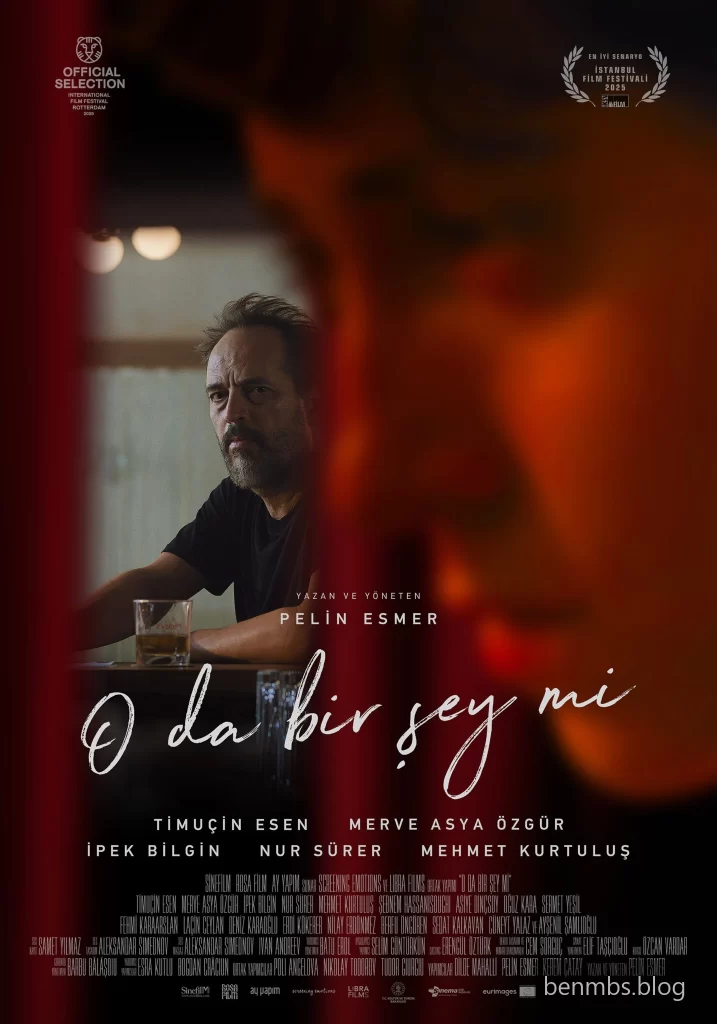
"And the Rest Will Follow" (O da bir şey mi?): A Few Words on the Film
The film I watched recently, O da bir şey mi? (And the Rest Will Follow), is a Turkey–Bulgaria–Romania co-production. It screened in Rotterdam in February and at the Istanbul Film Festival in April. It's picked up some awards, among other things. Details…
Comments (0)
Be the first to comment.