The Man Whose Capital Is Melting
I've been preparing for an exam for a while now. In a few weeks we'll sit it and see how things go. But there's a very interesting thing I've noticed in the process. It seems you have to live through certain things before you can notice them. Does the well-traveled man know, or the well-read one? The man who has lived much knows, sir. You can't know what you haven't lived. Our master, of course, has a line about this too — how could he not? "So it seems that even if the seed fell from the sky, it would still fall from the heart."[1] Sometimes a person gets so far, dragging their thought along, or being dragged by it. Then they start wandering somewhere, circling, going in loops. And then someone comes along and says, "A is A." "Fine," you say, "yes, I'm convinced at last, I understand, I believe, and I confess: A is A."
Maybe this is just my own stubbornness — my resistance to being taught. I don't know.
Anyway, I said I noticed something, and here I am drowning the point again, stretching it out. Dear brothers, what I noticed is time. Time that passes doesn't come back. That's the plain truth. It's the note some copyist scrawled, long ago, in the sad darkness of some hidden vault, on the yellowed page of a black-bound book buried in a dusty chest: time that passes does not return.
Teoman has a line I'm very fond of: "How is it that time never seems to pass, and yet the years, whole lives, slip by?"[2]
While preparing for this exam I also arrived at the truth of another thing: time is relative. Einstein was onto something. When you count the time left before the exam in days, a long stretch lies ahead; when you count it in weeks, you see how little is left — little enough to tighten your chest. And if you tell yourself, "studying is a journey, not a destination — let me not count, lest I jinx the blessing," you're only fooling yourself. The old masters, actually, found a way around this. They said: work for this world as though you'll never die, and for the next as though you'll die tomorrow. Learn your material as though you'll never sit the exam — savoring it, absorbing it slowly, at leisure — and study for the exam as though you'll sit it tomorrow — hurriedly, precisely, target by target. Blessed is whoever can pull that off.
Anyway, to finally get to the actual thing that prompted me to write this piece, the thing I really noticed: there is a truth, dear audience, and it is this. Someone whose profession is being a student, but a lazy one, can study 6 hours a day. That's perfectly normal, perfectly achievable. A somewhat more diligent and determined student might push it to 8 hours. But then there's studying 10 hours — and that is something achievable only through millimeter-precise calculation.
Let me clarify something here: by "studying" I don't mean time spent at the desk, I mean time genuinely, actively, productively spent with the book. I mean the duration you'd get if you paused your stopwatch every time you went to drink water, make tea, or use the bathroom, and only resumed it once you were back to actually reading. Not "I walked into the library at 10, walked out at 7 in the evening, ate for an hour, so — good, I studied for 6 hours" — no. If you spent 3 minutes on WhatsApp, you studied 5 hours and 57 minutes. That's what I'm talking about.
Anyway, millimeter-precise calculations, we said. If a person genuinely wants to study 10 actively productive hours a day, they need, as I said, to calculate down to the millimeter. Yesterday I studied 10 hours; today, 8. Why? I look back and see: I left the house half an hour late in the morning; my bag wasn't ready; I'd forgotten the scarf I tuck under my elbow at home; a phone call came in; İmamoğlu got arrested; today I took four long breaks instead of three, and so on... All perfectly human things. But the exam isn't a human affair. It's not known whether one extra cup of tea causes a storm in the Pacific, but it's quite clear that it causes less studying.
Let's return to the question our people's poet Teoman asked: how do the years, whole lives, slip by? That question was really the reason I wrote this piece. My aim was never to hand out study tips or narrate my exam prep. I'll cite a couple of books I haven't actually read. There were some nice examples in Atomic Habits.[3] In short, it argued that things invisible to the eye matter enormously for productivity. Take, for instance, the little clip I use to hold down the pages of the book resting on my stand. It probably saves me 10 minutes a day :) Another book divided life's tasks into four categories: urgent and important; urgent and unimportant; not urgent and important; not urgent and unimportant. The author said that what makes us who we are is the time we allocate to things that are important but not urgent. Learning a language, for instance. Not urgent, but important. Or being a good person. Urgent? Debatable. Important? Beyond debate.
How do our days slip away? How much time do we spend on what, over the course of a day? While preparing for this exam I see and experience, very painfully and very clearly, that even a five-minute chat at the library holds you back from your goal by the end of the day. So what about something bigger — say, in life as a whole — what do the things we spend time on, ponder, let occupy our minds, keep us from?
Twitter, for instance. I've been on Twitter for years. I've made some wonderful friendships, wonderful bonds there. And I'm glad I did. I've encountered many different worlds through it. But honestly, friends — of the time I've spent on Twitter, how much went toward forming meaningful connections, and how much toward simply killing time? It's not as if we're being cleansed under rains of wisdom, running hand in hand with friends through the Garden of Eden. Let's admit it.
Don't miss new posts
Join the email list and hear about new writing as it lands.
I'm 27. By now I've probably watched thousands of films and shows. Let's say a few thousand — no need to exaggerate. That amounts to thousands of hours. And an hour isn't just an hour — those could be some of the finest hours of one's day. What did I gain, and what did I miss, spending that many hours watching films and shows? Yes, in my own estimation, I've developed an above-average taste and culture in film and television. That's a gain, in my eyes. But what did I miss? How much of my loved ones' time did I take in exchange for that culture? How many library's-worth of hours did I kill on some pirated streaming garbage-heap before I acquired that culture?
What's left in my hands after so much needless effort and toil? Read well, Hayko — I'll ask it in his very tone of voice: "What's left of my capital besides the sin?"[4]
I don't mean to suggest I'm some wreck beating his knees in regret, seeing nothing in his past but remorse — I don't want to be misunderstood. I'm exaggerating a little, only to make certain things visible. Reporting here from within time's unbreakable flow, friends: my point is this — time that passes does not come back. Our capital is melting. We are in need of mercy. Alas, we aren't out there selling ice in the streets of Baghdad — if mercy is to come at all, it will have to come from within ourselves.
Anyway, meaning to write this piece, I've once again eaten into my study time. We've come to the end of yet another insincere piece of writing.
April 1, 2025
[1] Münacaat (Supplication), İsmet Özel
[2] Paramparça (Shattered), Teoman
[3] Atomic Habits — James Clear
[4] Nem Kaldı (What's Left), Hayko Cepkin
Don't miss new posts
Join the email list and hear about new writing as it lands.
Recent posts
An Attempt to Transcend Mediocrity Through Islamic Thought
"He is the One who perfected everything He created. [...]" As-Sajdah, 7. Recently, while thinking about mediocrity again, I wrote the following on Twitter: "I've been thinking about this for a while, and I'm making a claim…"
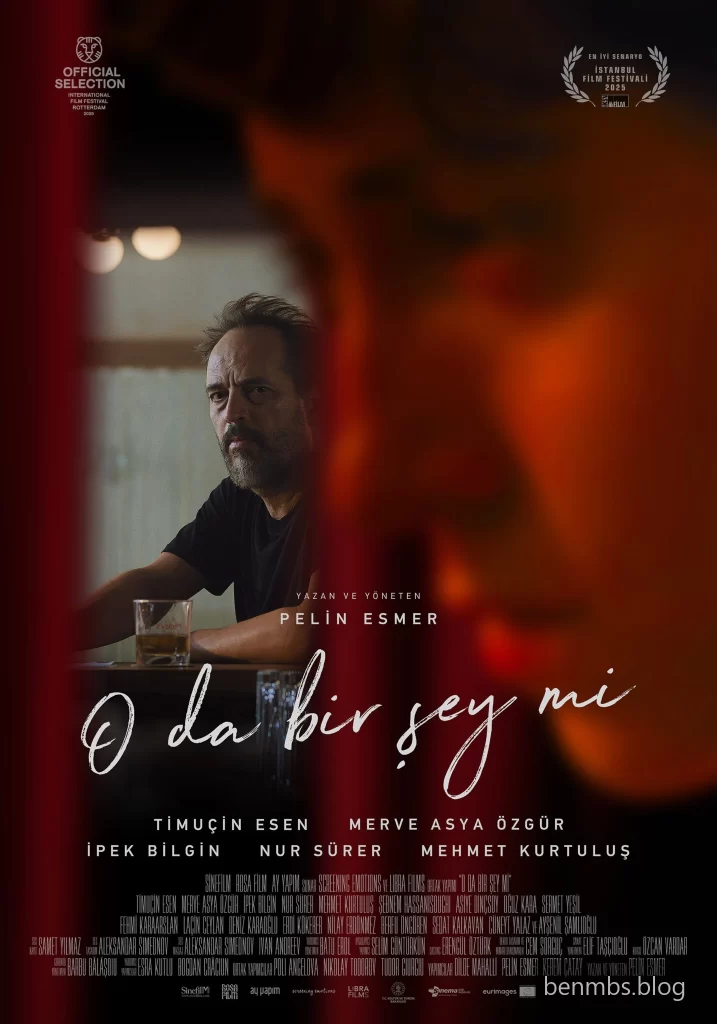
"And the Rest Will Follow" (O da bir şey mi?): A Few Words on the Film
The film I watched recently, O da bir şey mi? (And the Rest Will Follow), is a Turkey–Bulgaria–Romania co-production. It screened in Rotterdam in February and at the Istanbul Film Festival in April. It's picked up some awards, among other things. Details…
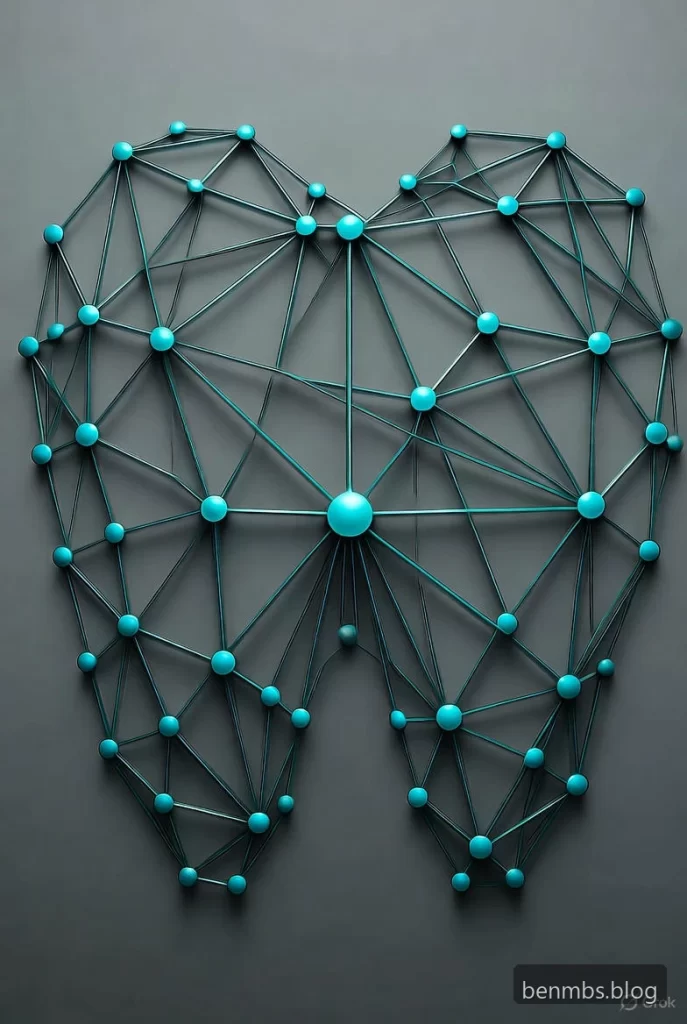
Freelance Dentists and Some Problems of Dentistry, with Proposed Solutions
I asked Grok to draw something representing the communication network of dentists. This is what it drew. In this piece, I'll try to lay out some observations about problems faced by freelance dentists, and offer some suggestions for solving them…
Comments (0)
Be the first to comment.