Exams, Plans, Realities: A Note to the Dream-Doctors Caught Between the Dental Specialty Exam and General Practice — Or, the Lines Behind the Last Photograph I Had Taken While Smiling at My Executioner
In the piece I wrote recently about the flow of time [The Man Whose Capital Is Melting Away], I mentioned I'd be sitting an exam. I sat it fifteen days ago, friends. The result? I failed.
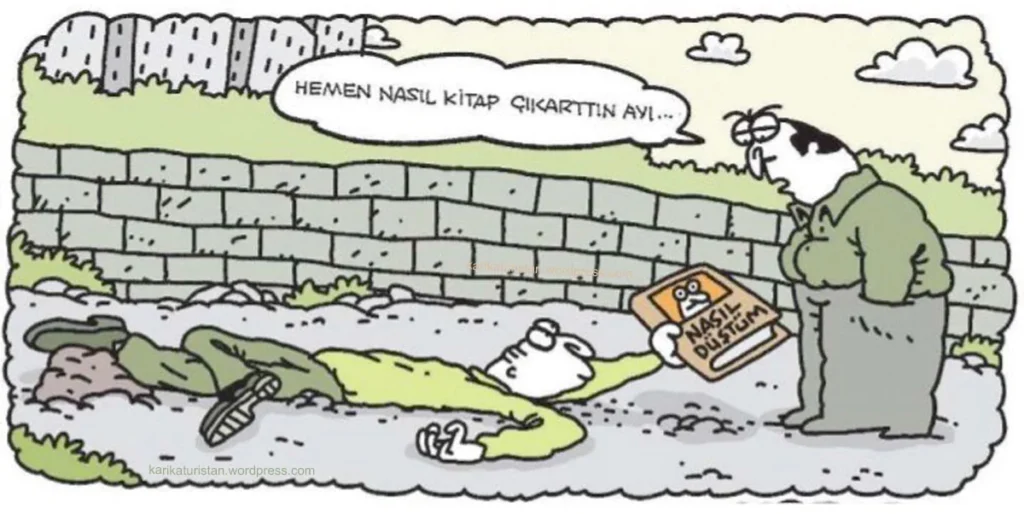
See: “We Didn't Make It, Boss”:
My heart would have wished for me to write a piece called “How I Succeeded,” but fate wove its web, and what fell to my lot was to write a biography of failure instead.
Yiğit Özgür - How I Fell
So what, then, is the compelling factor that makes the setting-down of such a piece incumbent upon me? What is it that drove me up out of my armchair and into my writing chair, pushing me to pen these lines? As with so many other things, I'm really doing this for myself. First, to clarify my own thoughts; in the middle, to leave myself a note; and at the very end, to leave behind a pleasant echo beneath this celestial dome. That is my aim.
Of course, writing isn't something I do purely for myself. Another reason I'm writing this is the thought that, should someone Google things like “how to prepare for the DUS,” “DUS advice,” “DUS or general practice?”, “how should I prepare for the DUS,” or “God-forsaken DUS,” this piece might turn up before them and be of some use.
Yet another factor behind this piece is the command of İsmet Özel — a permanent guest in these writings of mine — who says: “At the very least, set this heartbreak down on paper; write it through to the end.” So let us set our note down in history, then. Here we go.
Throughout my life I have almost always been left to my own devices; I have almost never been able to benefit from anyone else's guidance. Partly this is due to my own thickheadedness, but it is also because the people around me whom I turned to for advice never gave — or were never able to give — me counsel the way I wanted it, at the points I wanted it (I'm speaking here of process, not outcome). For this reason, I've wasted a great deal of time on many things I cared about, and fallen behind in plenty of others besides.
In fact, one afternoon months ago, I wrote something like this to a friend: “I've realized I don't know how I'm supposed to know things, or even what I need to know. How can I fix this ignorance of mine?” I went on to clarify the matter with examples from my own life. I'm still in the same place. Amid so much ignorance, a person goes looking for a guide for himself — a mentor to give him counsel. I have felt the lack of one, and I keep feeling it. So, at the very least, I'm setting these lines down so that those who come after me won't have to feel it too.
Why did I prepare for the exam?
Probably because I'd been made to study for this degree somewhat against my will, not much about my field ever really caught my interest. We dragged the course out but finished it somehow. We entered the market. Conditions were bad, but the bosses were making good money. If I too had sunk my teeth in (don't try this at home, you'll get abfraction) or gritted my teeth (don't try this either, first comes bruxomania, then bruxism), I might have woken up tomorrow a stronger dentist and started earning good money myself. In this fashion I dawdled along for a while: six days a week, zero social security, shifts running up to ten hours a day. Then I changed jobs. I saw that plenty of people who'd been in the market for years were stuck exactly where I'd left off. Working five days a week was a source of pride; having Saturdays and Sundays off stood before them like a sweet dream. As for the pay, it was barely more than a few coins. I got to see exactly what would happen if I sank my teeth in or gritted my teeth: unhappiness.
After that, I changed jobs again (in truth, I was let go for no real reason at all). But by then I had no hope left in the market. Yes, finding and switching jobs was easy — but finding a good job (good job meaning: working ethically, forty hours over five days a week, having annual leave — a whole set of refugee-like demands, apparently) was hard. Whether you were a general practitioner or a clinical assistant made no difference; to the boss's eye, they were all the same. One leaves, another comes in. I said to myself, brother, this can't go on. Let's become specialists, so we're not left standing there staring at whatever words happen to fall from the lips of these worthless, spineless people. And that's how my preparation for the specialty exam began.
I haven't mentioned this much, but I'd actually already done a bit of preparation back in undergrad, though I'd dropped it for reasons beyond my control. I looked at my books again. I said to myself: come on then, let's begin.
I had one advantage. Since I'd effectively taken out a season pass on every resit exam back in the faculty, I'd been through most of the clinical courses several times over. Of course, though I had no idea at the time, this “advantage” would later come back to trip me up… Anyway, the clinical subjects were easier to study — and it wasn't half bad, honestly. As for the basic sciences, I knew nothing. Except the left femur. Biochemistry and physiology alone took up two months of my life. Meanwhile, problems cropped up at home, and we ended up oscillating between hotel — in-laws' place — my parents' place — sleeping on the floor at home; that will have played a part too, I suppose :)
Then I discovered Dus Akademisi. I took courses from instructors Yavuz and Feyyaz, switched textbooks, and so on — by then there were only three or four months left before the exam. I still hadn't even opened nine of the fourteen subjects. The basic sciences got finished somehow, apart from anatomy; the clinical subjects just flew by. The exam arrived and hit like a truck. In some subjects I managed three full passes; in others I could only get through once — anatomy, orthodontics, prosthodontics among them.
How did I prepare?
I've actually already touched on this above, but a bit more detail won't hurt.
I listened to the lectures. I read the book. I tried to solve practice questions and couldn't. I looked back at the book again. I scribbled together a few questions off the top of my head. Then I moved on to the next subject. In between, I'd go back and reread the earlier ones.
Don't miss new posts
Join the email list and hear about new writing as it lands.
For the basic sciences I followed a routine weighted toward video lectures plus reading, while for the clinical subjects I tried to focus mainly on reading plus practice questions.
So why did I fail?
When I started preparing, I think there were about five months left. I spent two whole months on just two subjects. Then other problems came up in my life, and so on — all told, I probably managed to study for about four months. And the last of those months was the intense one; the other three passed rather lightly. Because I had so many gaps in my subject knowledge, I couldn't solve practice questions; and because I couldn't solve practice questions, the subjects never really settled in.
I studied the basic sciences a great deal and couldn't spare time for the clinical subjects. My basic-science net score had been coming in between three and five on the practice tests, but on the actual exam it came out to something like seventeen. My clinical net score, meanwhile, only managed to reach around forty. I made good progress on the basics, but trusting too much in my clinical knowledge was my undoing.
So, how do I plan to succeed?
I'm no longer starting from zero. Having barely gotten through five years' worth of coursework in six and a half years, pushing it up to a seventy-percent success level (a net score above eighty) in just five months was always going to be very hard — and indeed, I didn't manage it. But since I'm no longer at square one, going forward I should now be able to do what I couldn't do enough of before: solving practice questions and full-length mock exams.
Compiling the questions I got wrong, and putting together quick-reference notes and concept maps, are also among the things I'm considering.
Whereas finishing a single subject used to take me two weeks, now it should take something like three to five days for the basic sciences and about three days for the clinical subjects. Say four days on average — that means a full review cycle should wrap up in about sixty days. Very rough math, but I do have a more detailed plan, don't worry. I'm not about to lay out my whole study schedule here :D
Plenty of review through practice questions, and choosing the right instructors this time — God willing, it'll work out. Amen.
Now, let's turn to the prep courses.
Oh, prep courses, I have complaints about you. Yes, I'm not sure how much of a guide a failed student can really be, but I can no longer think charitably of most of you. Some of you are absolute dinosaurs. Some prep course, God knows how many years old, with tens of thousands of students, and yet its website and online system are so amateurish even a junior developer wouldn't produce something that bad. They've printed a book that's practically on the level of a full academic textbook.
Some of you are newer, but you'll still go and write down the number of teeth in the human mouth just so you can later claim credit for “predicting” a question that came up almost verbatim. Look, we said there are 32 teeth, and something very similar came up on the exam! Well done, bravo, what can I say. Good thing you put that in your book — who knows what state we'd be in otherwise.
We look at the actual exams, and the questions aren't that hard. We look at the lecture materials, and they're drowning in unnecessary detail. We look at the question camps, and it's detail piled on detail. They run camps with three to four hundred practice questions, cramming separate bits of trivia onto every single answer choice. Then, when the real exam comes out, they go, “Look, we nailed eight or nine questions!” This feels a bit cringe to me, honestly. Brother, you've already crammed in fifteen hundred to two thousand little factoids — of course five or six of them are going to land. They're statistically bound to. At that point, is there anything left actually worth asking?
And it's not even as if those predictions come true word for word — the negation of the stem comes up instead, or a similar option shows up attached to a completely different question, and so on…
I'm starting to suspect that the reason they keep their lectures and questions this difficult and this exhaustive is precisely so they can tell the student, “this is a very hard exam, look, they might ask this, they might ask that,” and thereby make the student feel dependent on them. I'm very nearly convinced of it.
Anyway, all in all, I failed. God willing, it'll work out next time. For the basic sciences I'll probably buy another video course, but for the clinical subjects I'm not planning to buy one again. I hope to manage with plenty of practice questions instead. Getting through a thirty-hour course already eats up a whole week of a person's life. There are twenty-two weeks left until the exam. That's an unnecessary workload.
I'll save my grievances about the system, the dental association, the Ministry of Health, market conditions, and career choices for future pieces. Hayden, nelweda.
04.05.2025
Don't miss new posts
Join the email list and hear about new writing as it lands.
Related posts

Freelance Dentists and Some Problems of Dentistry, with Proposed Solutions
I asked Grok to draw something representing the communication network of dentists. This is what it drew. In this piece, I'll try to lay out some observations about problems faced by freelance dentists, and offer some suggestions for solving them…

Dentists of the World, Unite!
The other day, while reflecting on the sorry fate of dentists, I came across a piece by Dr. Davut Torlak of the Social Dentists' Collective…
South Korea and Seoul: A Traveler's Stream of Consciousness and Travel Notes
Like the other posts on this blog, this piece won't be a travel guide answering questions like "where to go in Korea" or "Korea travel guide" — instead it will be an invitation into the mind of a traveler (I think this is the first time I've called myself that)…
Comments (0)
Be the first to comment.